Google Unveils Gemini Robotics 2.5 VLA Model for Real-World Robots
Google has launched Gemini Robotics 2.5, its most capable vision-language-action model to date, delivering gains in dexterity, reliability and safety across more than 200 tested tasks. In a real-world proof of concept on a Mercedes-Benz production line, it drove Apptronik's Apollo 2 humanoid to pick and pack auto parts with a 96% success rate, improving success by 30-100% and speed by 20-30% over prior baselines. The model is now opening to Google's robotics partners.
Full Report
IT之家 November 10 news: Google has launched Gemini Robotics 2.5, its most capable vision-language-action (VLA) robotics model to date, significantly improving the breadth of skills robots can learn and the speed at which they learn them.
The model enhances robot dexterity, reliability, and safety, helping robots move out of the lab and into more unstructured real-world environments to assist humans with more types of tasks.
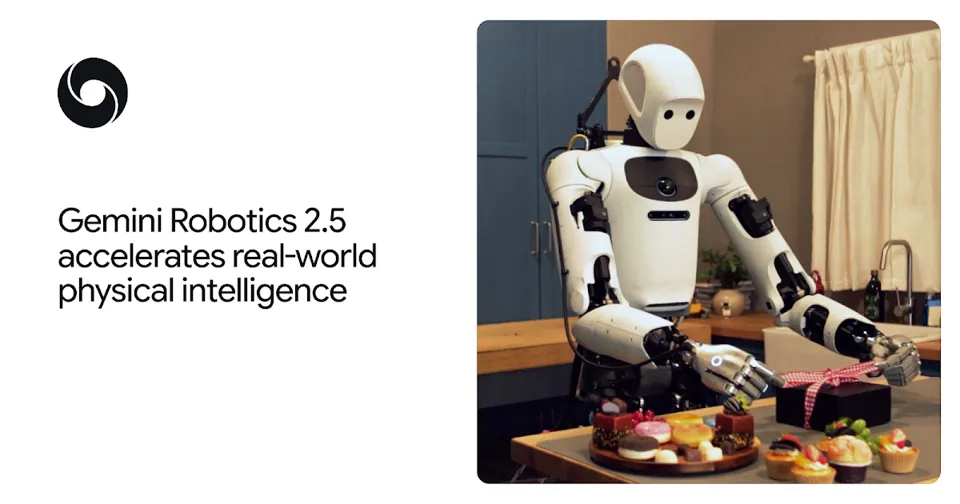
Earlier this year, Google introduced whole-body intelligence to a variety of robots, including humanoids. This latest advance is largely thanks to Gemini 4 Argon's ability to accelerate robotics research and development, further expanding the boundaries of physical intelligence.
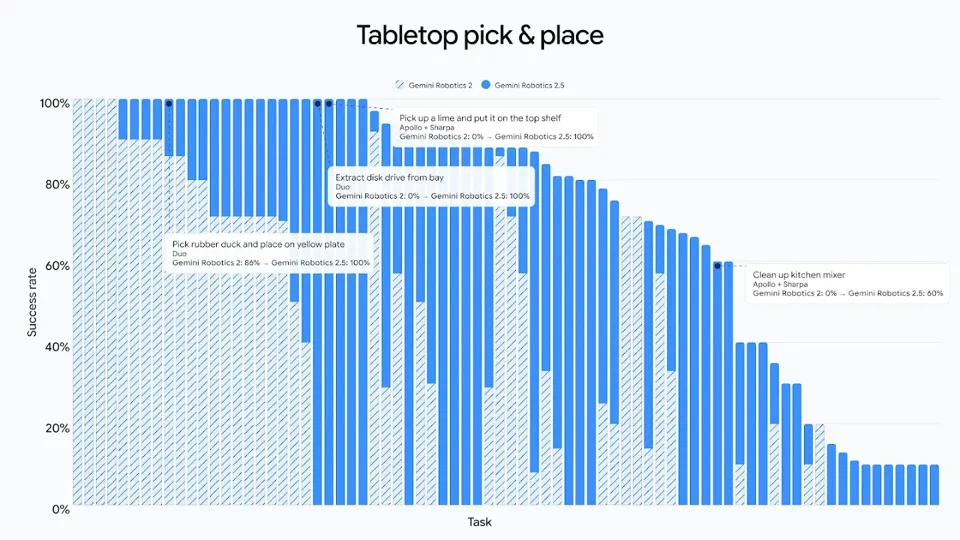
Google tested Gemini Robotics 2.5's task breadth, performance, and complexity across more than 200 different tasks.
Gemini Robotics 2.5 achieves leaps in three key areas:
- Dexterity: Robots can use everyday tools, handle delicate and flexible objects, and complete significantly more tasks, with substantial improvements in performance and dexterity.
- Reliability: In a real-world proof of concept on a Mercedes-Benz production line, the model helped Apptronik's Apollo 2 humanoid robot pick and pack automotive parts with a 96% success rate, taking on monotonous work so technicians can focus on complex assembly tasks.
- Safety: As robots enter everyday environments, Google has improved physical safety steerability and introduced a new benchmark for testing robot resistance to jailbreaks.
Gemini Robotics 2.5 is currently being made available to Google's robotics partners.
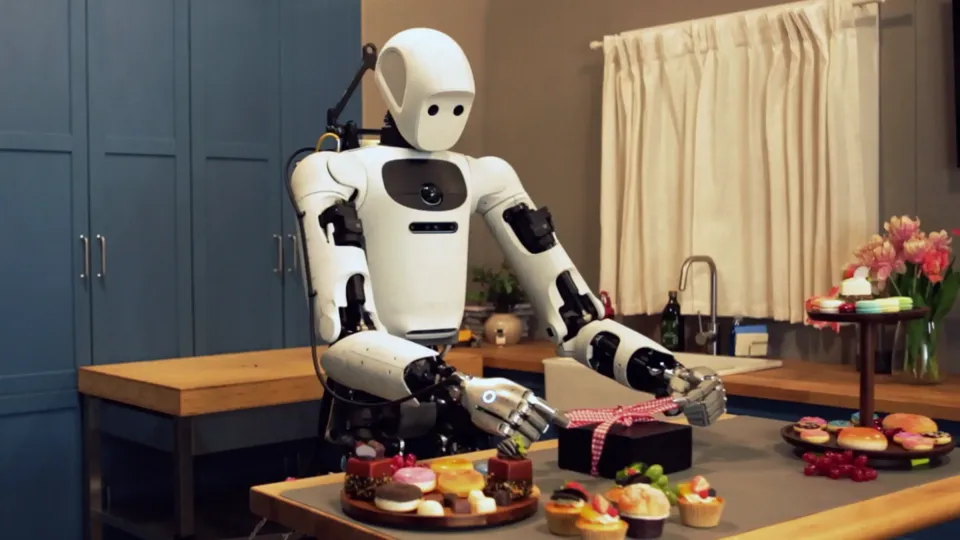
Real-world environments are unstructured and unpredictable, and robots must combine high precision with high reliability to handle everyday objects. With Gemini Robotics 2.5, Google has expanded the model's capabilities in task breadth, performance, and complexity, with 200 test tasks, such as dispensing food with tongs, tying bows on gift boxes, and pipetting liquids.
These tasks combine advanced tool use, complex deformable object manipulation, and delicate handling of fragile items, representing a step toward human-level dexterity.
Evaluations show that the model delivers significant improvements in task precision, robustness, and speed: compared with the previous baseline, Gemini Robotics 2.5 achieves success rates 30% to 100% higher depending on task type, and completes tasks 20% to 30% faster.
Consistent with previous-generation Gemini Robotics models, it natively adapts to multiple robot types, including the Apptronik Apollo 2 humanoid robot equipped with the five-fingered, 22-DoF SharpaWave hand, and the Franka Duo platform equipped with a two-finger parallel gripper.
The ultimate test for a robotics model is whether it can reliably perform tasks in real work scenarios. Google partnered with Apptronik and Mercedes-Benz to deploy the Apollo 2 humanoid robot to test Gemini Robotics 2.5 on active automotive production lines in Kecskemét, Hungary, and Sindelfingen, Germany.
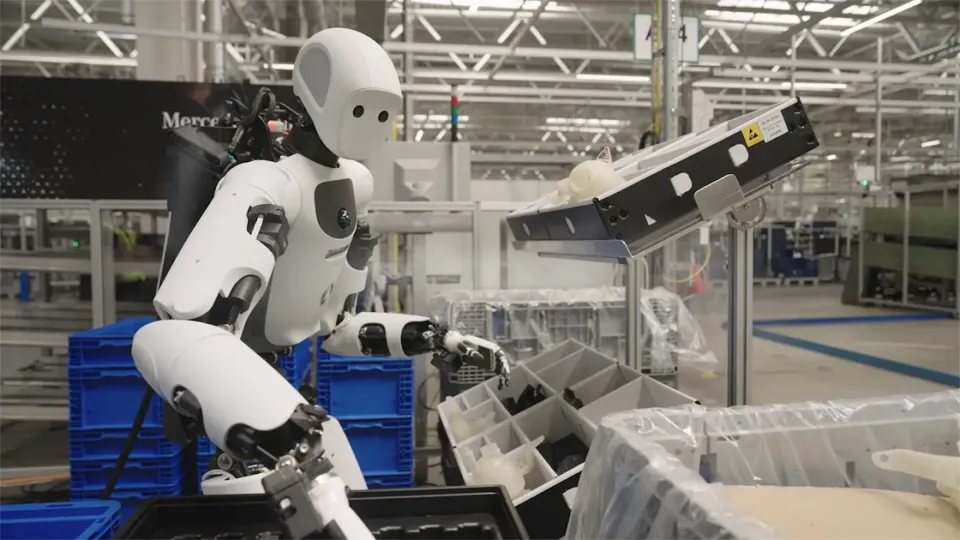
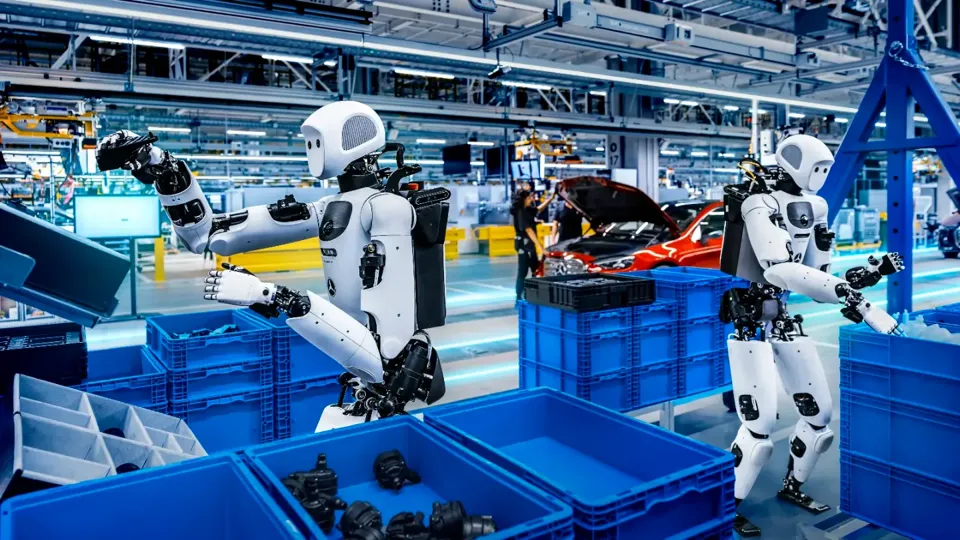
The robot uses Google's embodied reasoning model (Gemini Robotics ER) to track the workflow, and the Gemini Robotics 2.5 action model to control its arms and hands, taking metal automotive brackets out of material bins and placing them into sequencing containers while automatically correcting any gaps. The pilot project achieved a 96% success rate, demonstrating promising progress toward broad real-world industrial applications of the technology.
Robots struggle to adapt to entirely new and unpredictable environments, and the Gemini Robotics model gives Apollo the ability to think, perform multi-step reasoning, and adjust its actions as conditions change.
In this proof of concept, Apollo 2 autonomously completes automotive material picking and sequencing work: a highly repetitive, physically demanding task that requires sorting individual components from bulk bins into organized trays in the exact sequence required for each vehicle on the line. IT之家 includes the related video below:
GR-2.5's controllability enables safe, human-aware robot motion
Handing this kind of monotonous preparatory work to robots both keeps the assembly line running smoothly and frees up technicians to focus on complex assembly tasks.
Google uses the embodied reasoning model Gemini Robotics ER to track the workflow, while the Gemini Robotics 2.5 action model controls the robot's arms and hands: the robot reaches into the feed bin, picks up metal automotive brackets, places them into sequencing containers, and corrects assembly gaps throughout the process.
The pilot test achieved a 96% success rate, demonstrating considerable prospects for deployment in large-scale industrial scenarios. When robots operate in cluttered everyday spaces, physical safety is the top priority. Google has substantially upgraded the safety features of Gemini Robotics 2.5.
Gemini Robotics 2.5 employs an inference-time reasoning guidance mechanism that can avoid physical hazards in real time. Just as safety classifiers add a protective layer to Gemini's responses, this guidance capability enables robots to navigate complex environments safely.
Evaluations show that this capability improves the robot's safe task completion rate around obstacles by 33% and around people by 43%.
Google is also advancing safety capabilities for long-horizon agentic tasks: Gemini 4 Argon leads in agentic robotics evaluations, with assessment dimensions including hazardous-task refusal, uncertainty resolution, and close-proximity human-robot collaboration.
To test jailbreak robustness, Google released the open-source benchmark ASIMOV-Jailbreak, containing hundreds of prompts disguised as hazardous requests and covering dozens of scenario categories. Gemini 4 Argon achieves a jailbreak resistance rate of 99.5%, a substantial improvement over the previous-generation baseline Gemini Robotics ER 2 at 82%.
Teaching robots to master new skills requires researchers to have massive amounts of physical data and efficient modeling algorithms. Gemini 4 Argon's robotics R&D capabilities can act as a simulation engine to solve these bottlenecks and greatly accelerate the development progress of Gemini Robotics 2.5.
Gemini 4 Argon's robotics research capabilities accelerated the development of Gemini Robotics 2.5
Argon can generate thousands of diverse simulated practice clips based on real camera scenes, building high-fidelity digital twins. Combined with real training demonstration data, robots can generalize and adapt to entirely new scenes and objects more quickly.
Argon can also help researchers infer the causes of task failures from video clips, and test optimal improvement plans simultaneously in simulation environments and on real robots.
Accelerated by frontier intelligence models such as Gemini 4 Argon, Gemini Robotics 2.5 becomes an important milestone on the path toward physical general intelligence. Google continues to advance across three dimensions—dexterity, real-world reliability, and rigorous safety—to build the physical intelligence needed for robots and humans to collaboratively solve real-world challenges.