Harvard-led Team Open-Sources STRAND Virtual Cell Model for DNA Perturbation
A Harvard Medical School, Johns Hopkins University and Merck team has proposed STRAND, which replaces gene-ID perturbation inputs with DNA sequence plus target position, enabling interventions in non-coding regions and predicting multi-gene responses beyond the input window. Accepted to NeurIPS 2026 main conference with code released, STRAND complements Google DeepMind's AlphaGenome 2: the latter models variant effects within a sequence, while STRAND targets cross-window downstream responses after perturbation.
Related Entities
Full Report
Contents13 sections
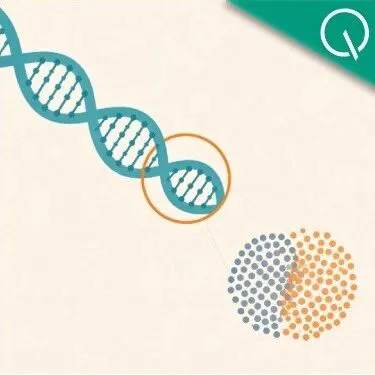
Predicting linked gene responses from any DNA segment
Contributed by the STRAND team
QbitAI | WeChat Official Account QbitAI
Suppress the activity of a small DNA segment—which genes in the cell will change along with it? And if it is moved to a different location, will the result still be the same?
On November 11, Google DeepMind released AlphaGenome 2, incorporating cell type and state as prediction conditions to further characterize how DNA variants affect different cells.
It can predict, given a cell state, how a DNA variant will affect gene expression within the same sequence, looking at up to about 1 million base pairs at a time.
STRAND, proposed by Harvard Medical School, Johns Hopkins University, and the Merck team, focuses on a different question: if one site is perturbed, can the responses of genes outside this sequence also be predicted together?
The team turned its attention to the连锁 responses after perturbation: specify a position on the DNA, combine it with the state of unperturbed cells, and generate the multi-gene expression profile after perturbation.
Local DNA provides perturbation clues, while the predicted gene responses can extend beyond the input window.
This work has been accepted to the NeurIPS 2026 main conference, and the code has been made public.
Protein-coding sequences account for only about 1.5%; how can perturbation prediction move beyond the coding region
In the human genome, sequences that directly encode proteins account for only about 1.5%. The broader non-coding regions contain regulatory elements that control when, where, and how strongly genes are expressed. Promoters act like "entry switches," while enhancers can regulate gene activity: to change cell behavior, the positions that can be manipulated go far beyond the objects represented by gene labels.
Many single-cell perturbation models use gene IDs to describe perturbations. When perturbations are applied separately to two promoter entries of the same gene, the input is still the same ID, and the model receives no information to distinguish the positions.
STRAND changes the perturbation input to "DNA sequence + target position." The architecture input given in the paper supports coverage of about 95% of the genome, uses 128 bp as the representation unit, and allows perturbation positions to be specified in non-coding regions.
**△**About 1.5% corresponds to protein-coding sequences, and about 95% corresponds to the architecture input supported by STRAND.
How a DNA foundation model connects to single-cell perturbations
The difficulty lies in the different granularity of the two types of data: DNA models can provide representations at sequence positions, while many single-cell perturbation datasets only annotate "which gene was perturbed." STRAND uses a learnable DNA interface to connect sequence representations to a cell response generation model.
You can think of cell state as a ball on a hillside: with the same starting point, different perturbation positions may lead the ball into different valleys.
**△**Under the same cell background, the difference between input by gene label and input by sequence and position. The point clusters in the valleys represent predicted response distributions; the terrain and paths are conceptual illustrations.
Giving different positions their own conditions
STRAND uses frozen Flashzoi/Borzoi to encode DNA, with each token corresponding to 128 bp. A mask marks the region to be perturbed, while the surrounding sequence is kept as context.
The DNA perturbation module first aggregates the tokens covered by the mask to form a Query; it then uses cross-attention to read sequence information within the window and adds a relative-distance bias. The resulting condition describes both "where the effect acts" and "what regulatory clues are nearby." Moving the mask changes the perturbation representation the model receives even if the gene ID stays the same.
For data with only gene names, the team uses 200 bp around the transcription start site (TSS) as a positional approximation; when precise gRNA coordinates are available, the input is constructed according to the actual position. The DNA foundation model provides pretrained representations, while single-cell experiments teach the newly added modules what kind of cellular change corresponds to such sequence conditions. Coarse-grained experimental labels are thus connected to inputs with position and sequence content, allowing the effects of different DNA positions to be queried at inference time.
**△**Local view of the DNA module. The target region forms the Query, and cross-attention reads the sequence context within the window.
Letting Diffusion start from real cell states
The frozen RNA encoder SCimilarity compresses the expression profile of unperturbed control cells into a latent. Because single-cell sequencing usually cannot track changes in the same cell before and after perturbation, STRAND first uses Optimal Transport to establish statistical pairings between control and perturbed cell populations.
Then, I²SB constructs noisy intermediate states between the latents at both ends and learns to recover the perturbed state conditioned on the DNA condition and the control latent. Inference starts from the latent of the control cell and generates responses through multiple steps of the reverse bridge. This allows the cell's original state to participate directly in generation.
For example, a perturbation may cause half of the cells to respond strongly while the other half barely move. Its average may be the same as "all cells change a little," but the actual cell population is very different. What Diffusion needs to learn is exactly this response distribution.
Finally, a residual decoder uses control expression as a reference to restore the generated latent into expression changes for multiple genes, handling zero and non-zero expression separately. Training also uses contrastive learning to align DNA conditions with average RNA changes. Joint evaluation uses 2,000 highly variable genes as the output panel; these output genes do not need to lie within the input DNA segment.
**△**Local view of the generation and decoding modules. The DNA condition enters I²SB, the control latent provides the starting point, and the decoder outputs multi-gene expression predictions.
Two entries of the same gene cannot be distinguished by gene-level models
Take FLVCR1 as an example: this gene has multiple different transcription start sites (equivalent to different transcription "entries") and can produce protein isoforms with different functions. Existing experiments have shown that in K562 cells, FLVCR1b produced from another start site (an alternative entry) is particularly important for erythroid differentiation.
STRAND applies virtual perturbations at these entries separately and ranks the FLVCR1b entry first among five candidate entries, with a predicted impact score of 0.683, higher than 0.564 for the commonly used FLVCR1a entry, consistent with existing functional studies.
For models that only take gene ID as the intervention condition, these two questions correspond to the same input, so they cannot give different responses based on position**.** STRAND, on the other hand, can test these two loci separately and compare their effects.** Likewise, when the target is switched to an enhancer without an independent gene ID, the intervention can still be defined by sequence and coordinates**.
Near the e-HDAC6 enhancer, STRAND's scanning curve shows a local peak, less than 400 bp from the center of the validated enhancer. A model that only receives gene labels cannot output a response curve that varies with position along this stretch of DNA; in STRAND, this directly becomes a computable input.
△ The gray curve in the left panel shows that the gene-level model cannot distinguish positions within a gene; the right panel shows STRAND's predicted peak near a non-coding enhancer. FLVCR1 and e-HDAC6 are locus cases checked against existing biological evidence.
Can it still predict with a different intervention or a different cell type?
In few-shot experiments across three cell lines—K562, Jurkat, and RPE1—only 5 perturbed cells were provided for training for each test gene. STRAND's overall average rank across seven metrics was 1.86, compared with 3.14 for the next-best method. Among them, K562's perturbation discrimination score rose from STATE's 0.538 to 0.710, a relative improvement of about 32%; for genes unseen during training, STRAND also achieved the best overall rank among the evaluated methods.
Ablation experiments further examined the roles of the two modules: compared with fixed average pooling, the DNA module improved the average Pearson correlation on the top-100 changed genes by a relative 16.6%; compared with a deterministic MLP, the generative module reduced the Energy Distance on the combined dataset by 38.9%, bringing predictions closer to the measured cell distribution.
Cross-cell-line testing used a "train on other cell lines, fully hold out one cell line* (held-out)" setting. For the 100 genes with the largest changes, STRAND's average agreement on the direction of upregulation or downregulation was 58.7%, compared with 50.0% for STACK and 48.1% for STATE. In an independent HCT116 test, the model needed only the target cell line's control cells (no perturbation data or retraining required)*, and agreement still reached 56.8%.
First compare "where to change" within the model
For experimental researchers, one can fix the cellular background, scan different entry points and surrounding regulatory positions of a gene, compare predicted responses, and then choose more promising candidates for experiments. Current validation centers on CRISPRi, i.e., suppressing transcriptional activity in a specified region; other editing methods still require corresponding experimental testing.
For AI researchers, STRAND shows how to connect two types of foundation models to a new task: the DNA model provides intervention representations with sequence content and specific positions, the RNA model provides the system's current state, and conditional generation learns the changes after intervention. As a result, the virtual cell can continue to ask: for the same gene, what happens if the entry point is changed; and what happens if it is moved to a non-coding regulatory position?
*The authors, in paper order, are Boyang Fu, Sameer Gabbita, George Dasoulas, Xiang Lin, Shanghua Gao, Xiaorui Su, Soumya Ghosh, and Marinka Zitnik. Paper: https://arxiv.org/abs/2602.10156 Code: https://github.com/mims-harvard/STRAND
One-click triple action: "Like," "Share," "Heart"
Welcome to leave your thoughts in the comments!
— The End —
[Academic submissions] Please send an email on weekdays to: [email protected], with [Submission] in the subject line, and tell us: who you are, where you are from, attach a project/homepage link to the submission content, and provide contact information.
🎓 We will reply to you (as promptly as possible) :)

🌟 Light up the star 🌟
See frontier tech progress every day