Khosla Warns AI and Quantum Will Break Most Encryption by 2030
Investor Vinod Khosla predicts quantum computers will run Shor's algorithm before 2030, and that combined with AI-driven math breakthroughs this will crack most of today's encryption. He argues the post-quantum algorithms now being deployed only buy 6 to 12 months and that durable security must come from quantum encoding rather than harder math. The claim is a personal forecast, not a verified result, though it aligns with the present 'harvest now, decrypt later' risk.
Related Entities
Full Report
Rohan Paul (@rohanpaul_ai) · 2026-11-27 22
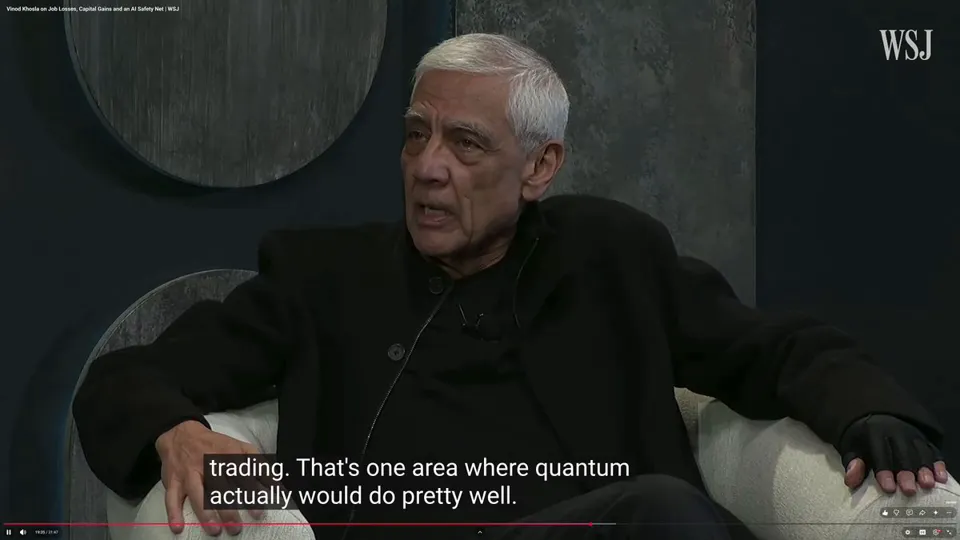
Vinod Khosla: AI models and quantum computers together will break most of today’s encryption before 2030.
Says "crypto is the most vulnerable"
He expects quantum computers to run Shor’s algorithm well before 2030. At that point crypto and most of today’s security get cracked, and China has been collecting encrypted data so it can read it once that happens.
He says the post-quantum algorithms being deployed now only make the math harder, which buys 6 to 12 months, and he expects most of them to break before 2030, with crypto the most vulnerable. In his view, lasting security has to come from quantum encoding, not from harder equations.
Full video on "WSJ Events" YouTube channel, (link in comment)
↳ 引用 @rohanpaul_ai (Rohan Paul): FT published a piece. AI-driven mathematics may threaten RSA encryption before quantum computers do, experts now warn.
ex-OpenAI researcher Scott Aaronson this week has said he is "virtually certain" AI labs are hiding encryption-relevant math breakthroughs.
Only 8% of 85 EU banks surveyed have a working roadmap for quantum-resistant encryption.
Banks are poorly placed if he's right, because only 8% of 85 EU banks surveyed by the European Banking Authority had an operational roadmap for quantum-resistant encryption.
That slow migration makes "harvest now, decrypt later" a present risk, since data stolen today could be read whenever a classical factoring shortcut appears.