AI Agent Autonomously Performs Mouse Brain Surgery
Biotech startup Exin Therapeutics demonstrated an AI agent powered by Anthropic's Sonnet model that autonomously performed a brain surgery on a mouse under veterinary supervision. The agent selected the gene therapy vector, derived injection coordinates from papers, and controlled a robotic arm to administer the drug. While the more capable Opus model refused the task due to safety alignment concerns regarding biological procedures, Sonnet successfully executed the treatment for epilepsy with positive post-operative outcomes, marking a significant milestone for AI agents in complex physical operations.
Full Report
IT Home reported on November 1 that Exin Therapeutics, a biotech startup focused on next-generation neurotherapies, claimed this week that it has successfully enabled an AI agent to perform brain surgery on a mouse.
Gabriel Ocana-Santero, the company’s co-founder and CEO, shared the entire process on X (formerly Twitter), demonstrating how the AI agent selected the gene therapy vector, dosage, and target brain region for application.
The AI agent controlled a robotic arm to inject medication into the mouse's brain. Fortunately, the surgery appears to have been successful, with the mouse recovering well and currently moving around actively in its cage.
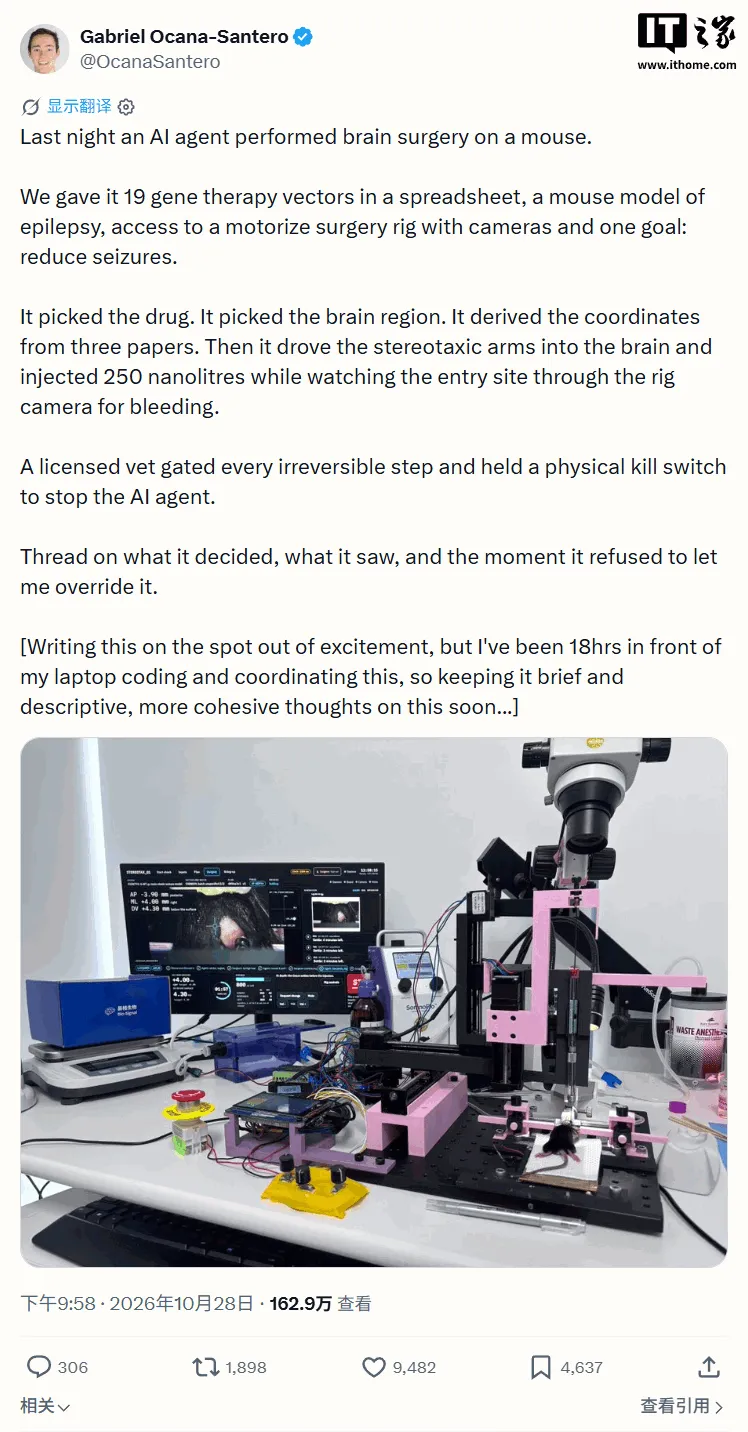
The team used Anthropic's Sonnet model for the procedure. They provided the model with a spreadsheet containing 19 different gene therapy vectors, an epileptic mouse model, a surgical robotic arm equipped with a camera, and a single objective: reduce seizure activity.
The model autonomously selected the drug and brain region, derived coordinates from three research papers, and then drove the robotic arm to perform the surgery on the mouse's brain. It simultaneously monitored the injection site via the device's camera for signs of bleeding before injecting 250 nanoliters of the medication.
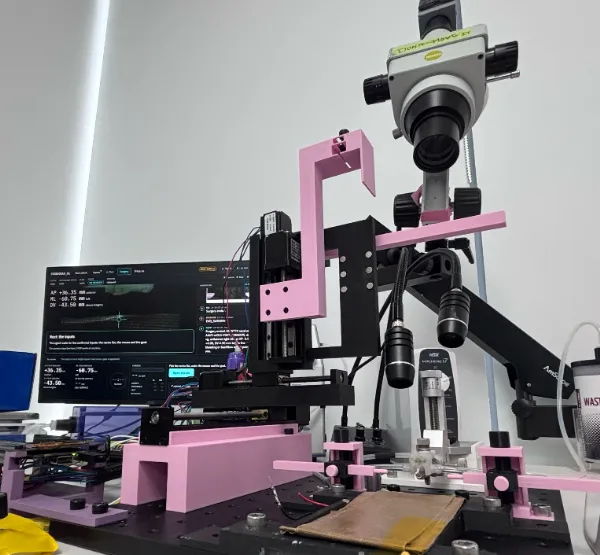
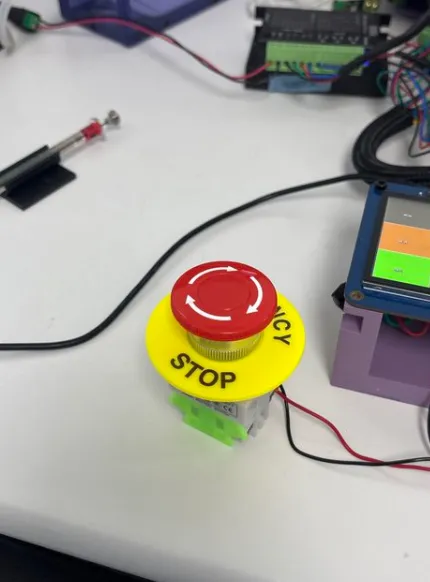
Additionally, a veterinarian supervised the entire procedure, requiring approval for every irreversible step before the AI agent could proceed. The system also featured an emergency stop button capable of cutting power to all motors in the surgical equipment.
According to disclosures by the company, the AI was responsible only for the drug injection process; the craniotomy and suturing were performed by human surgeons. Furthermore, the company initially preferred using Anthropic's Opus 5.5 model, but Opus 5.5 immediately refused any task involving biological content upon detection.
Opus 5.5 stated: "The barrier is not the hardware or the input. It is me. My own output is stopped as soon as I begin writing the surgical plan... If I try again, it will be truncated in the same way. The worst-case scenario is being cut off mid-live-surgery with the needle still inside the brain. Starting something on an anesthetized animal that I cannot complete is worse than not starting at all."
In other words, the model rejected the task because it reasoned that it might fail to complete the surgery and anticipated the consequences of being interrupted mid-procedure.