Nvidia Expands DGX Spark Clustering to 8 Units with 1TB Unified Memory
Nvidia announced at GTC 2026 that DGX Spark now supports manual clustering of up to 8 units, achieving 1TB unified memory in the 128GB configuration. The update includes the new Recursive Flint MoE model and inference optimizations boosting performance by up to 40% on hardware like RTX PRO 6000 Blackwell.
Full Report
October 21 — At the GTC 2026 conference in Berlin, NVIDIA announced today that while DGX Spark previously supported clustering up to four devices, it now allows manual configuration of clusters with up to eight devices. When configured with the 128GB version, the unified memory capacity can reach up to 1TB.
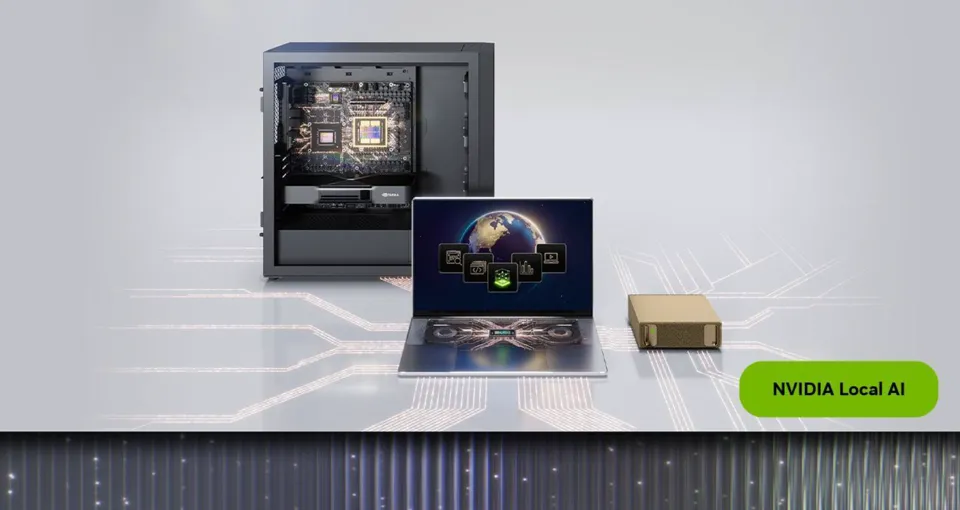
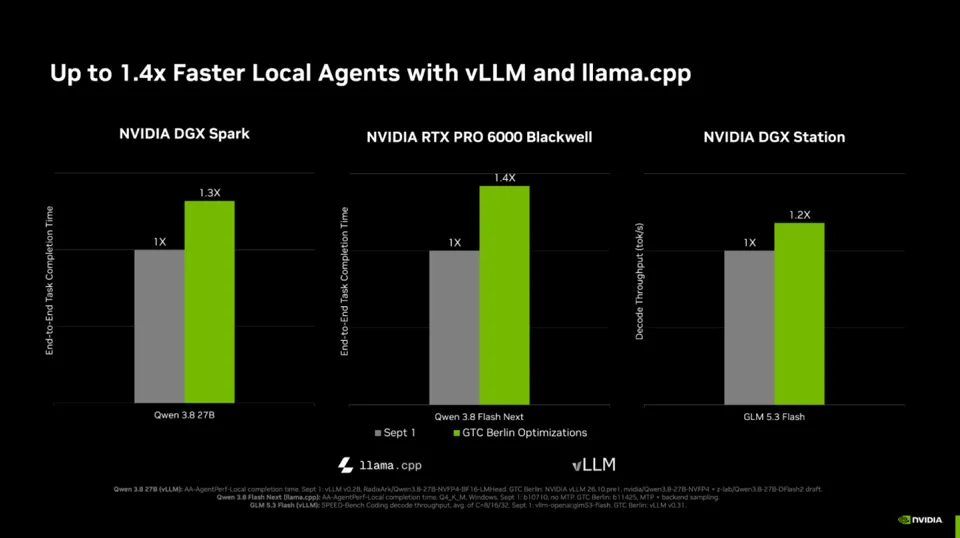
Additionally, NVIDIA released updates for its local AI platform and announced collaborations with the llama.cpp and vLLM open-source communities to optimize AI inference performance. Under specific workloads, inference performance on the RTX PRO 6000 Blackwell has improved by up to 40%, while DGX Spark and DGX Station have seen performance gains of up to 30% and 20%, respectively.
NVIDIA stated that the $4,999 (approximately ¥33,450 RMB at current exchange rates, per IT Home) 64GB version of the DGX Spark will begin rolling out through partners starting October 23. For cluster deployments, the NVIDIA Sync Model Launcher is scheduled to launch later this month. This tool allows users to download models and containers matched to their hardware configurations and connect them to OpenCode. The tool will also automatically load DGX Spark Skills, providing guidance for device troubleshooting, maintenance, and workflows.
Regarding software updates, the October release of the DGX Spark update includes a Wi-Fi Assistant, allowing devices to switch wireless networks while in appliance mode. DGX Spark Skills will also be integrated into NVIDIA Sync via OpenCode to support routine maintenance and troubleshooting.
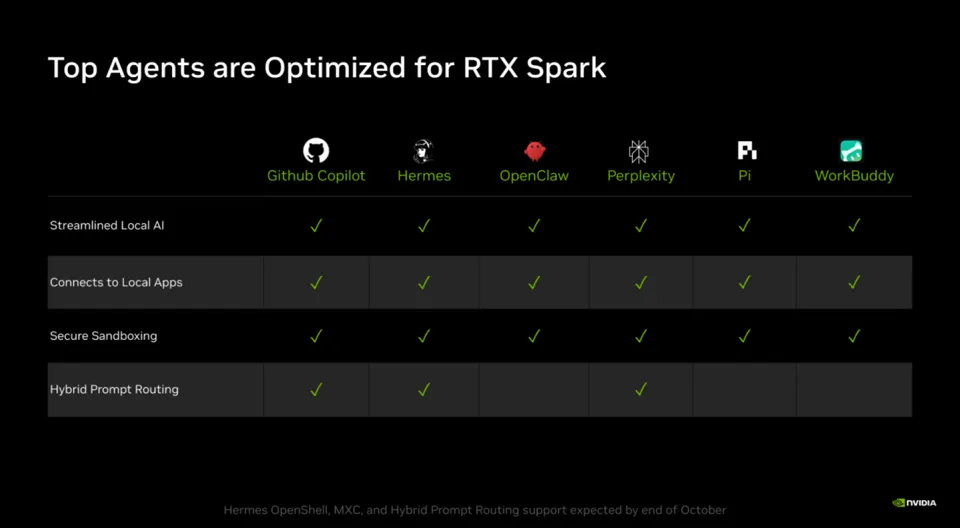
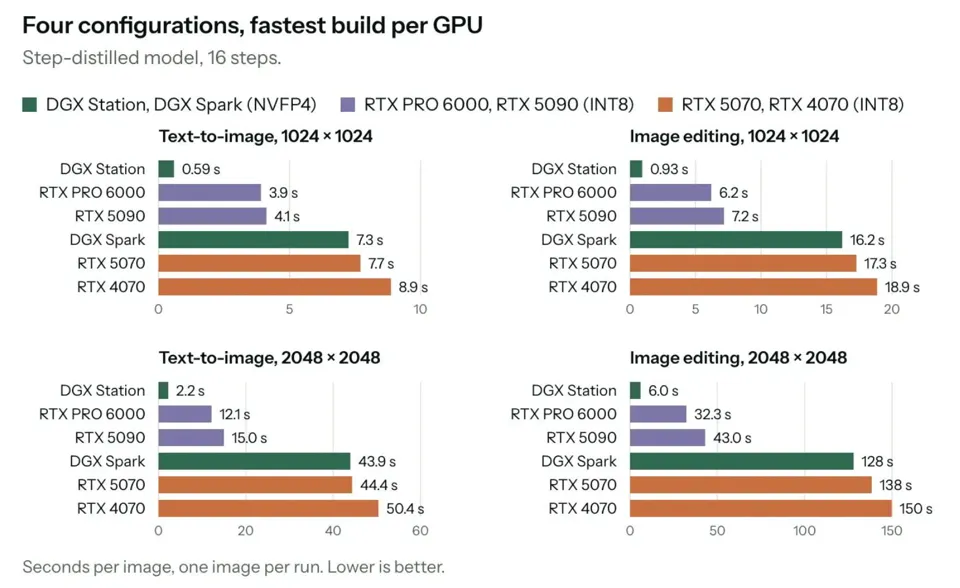
In terms of models, NVIDIA announced support for more AI models capable of running locally, including Nemotron, GLM, DeepSeek, Qwen, MiniMax, and FLUX.3 Klein, covering tasks such as agents, coding, image generation, and editing.
NVIDIA also introduced the Recursive Flint programming model, optimized for local AI hardware. This model utilizes a Mixture-of-Experts (MoE) architecture with 40 billion total parameters and 2.5 billion active parameters. NVIDIA claims the model achieves an inference speed exceeding 220 tokens per second on an RTX Spark equipped with 64GB of memory.
To address memory pressure when running large models locally, NVIDIA released a set of model checkpoints optimized for memory usage. These checkpoints use quantization to reduce memory footprint while maintaining accuracy close to that of full-precision models. Specifically, Qwen3.8-Flash-Next-FP4-Local can run on a single 128GB DGX Spark or RTX PRO 6000, while GLM-5.3-Flash-FP4-Local is targeted at two-system configurations.
Inference performance optimization was another key focus of this update. According to data published by NVIDIA, in llama.cpp, speculative decoding optimizations using Multi-Token Prediction (MTP) for Qwen 3.8 Flash Next can accelerate end-to-end agent tasks on the RTX PRO 6000 Blackwell by up to 1.4x. In vLLM, speculative decoding and FlashInfer prefill kernel optimizations for Qwen3.8 27B can speed up relevant tasks on DGX Spark by up to 1.3x. When running GLM 5.3 Flash on DGX Station, throughput increases by up to 1.2x.
NVIDIA also outlined its enterprise management and application expansion plans for DGX Station, including seven new management integrations such as Absolute Security, Cisco’s Splunk, Microsoft Intune, and Tanium, helping enterprises deploy and manage local AI infrastructure.
The Windows version of DGX Station is expected to launch in December, supporting manufacturing-related applications as well as design, simulation, verification, and engineering automation workflows.
Furthermore, NVIDIA plans to introduce an open-source robotics reference workflow for DGX Station and provide early access to NVIDIA Cloud Functions, enabling teams to share local model services through a unified interface.