DeepSeek V4.1 Flash Tops Open-Source Agent Arena Leaderboard
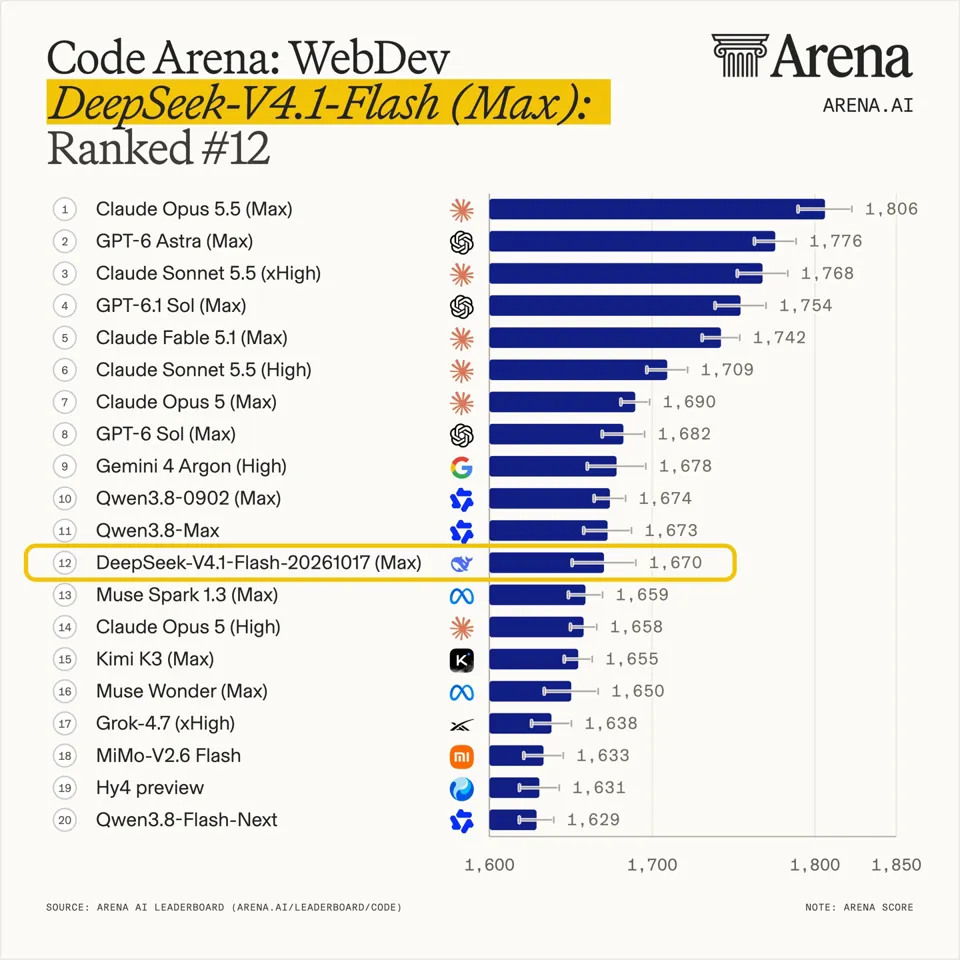
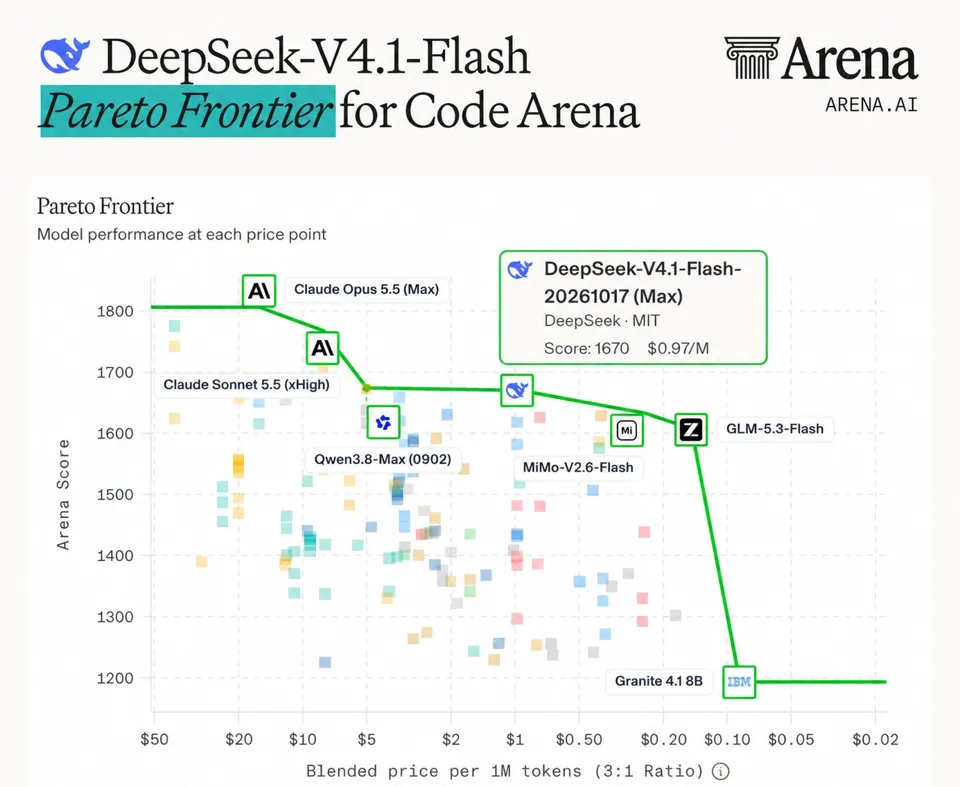
DeepSeek's newly released V4.1-Flash-1017 model has topped the open-source leaderboards for Agent Arena and Code Arena: WebDev, ranking 11th overall. The model achieves high task success rates and low tool hallucination with a median cost of ~$0.18 per task, placing it on the Pareto frontier for performance versus cost.
Full Report
On October 20, AI Arena announced that DeepSeek's newly released DeepSeek-V4.1-Flash-1017 has topped the open-source model leaderboards for both Agent Arena and Code Arena: WebDev, ranking 11th on the overall leaderboard.
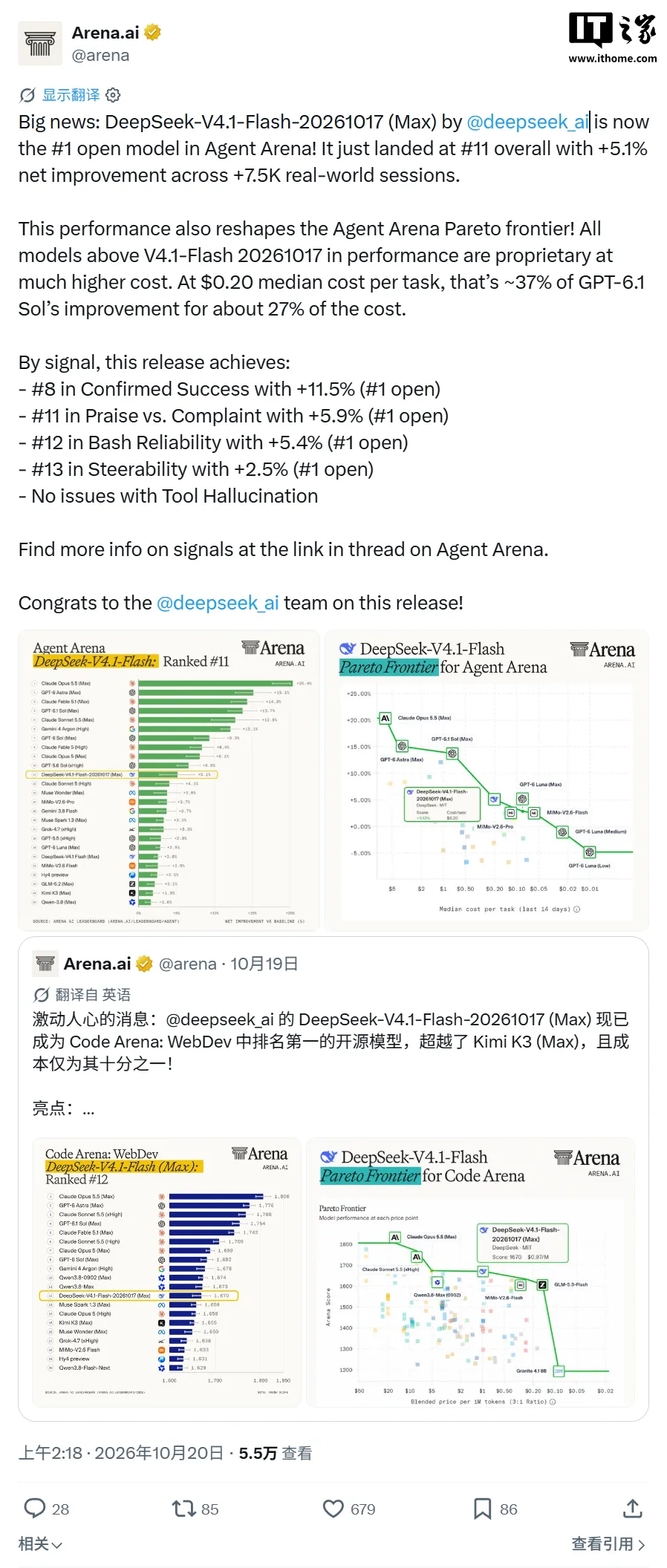
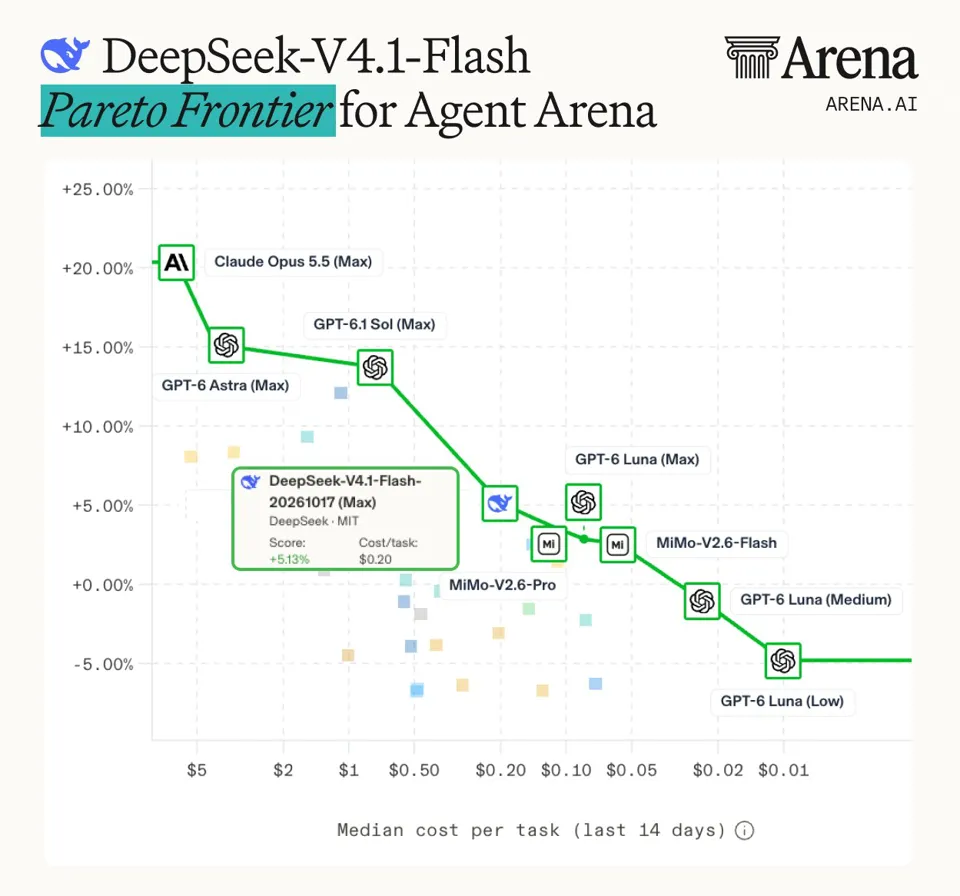
According to the Agent Arena leaderboard, DeepSeek-V4.1-Flash-20261017 (Max) ranks first among open-source models and 11th overall. Based on leaderboard data, the model achieved a comprehensive net improvement metric of 5.13% across 7,498 real-world usage sessions, with a median cost per task of approximately $0.18 (IT Home note: equivalent to about 1.2 RMB at current exchange rates).
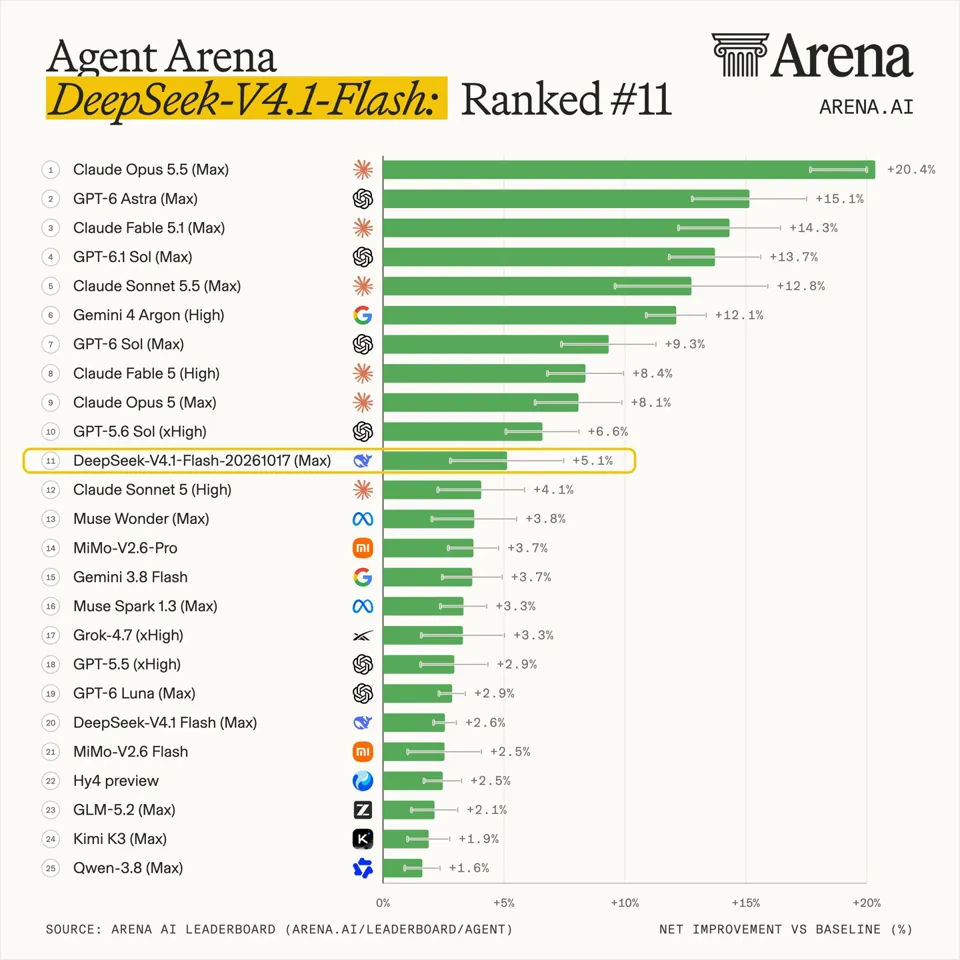
In terms of specific metrics, the model ranks first among open-source models in task success confirmation, user positive/negative feedback, and Bash command execution reliability. Specifically, the task success confirmation metric is 11.54%, ranking 8th overall; the user positive/negative feedback metric is 5.89%, ranking 11th overall; and the Bash command execution reliability metric is 5.42%, ranking 12th overall. The steerability metric is 2.46%, ranking 13th overall, while also placing first among open-source models.
Arena's leaderboard also shows that the model's tool hallucination rate is 0.48%. This metric measures instances where the model fabricates tools it does not possess; lower values indicate fewer such issues. By this metric, the model ranks 7th on the leaderboard.
Regarding costs, the median cost per task for DeepSeek-V4.1-Flash-20261017 (Max) is approximately $0.18 to $0.19, with slight variations depending on the specific leaderboard page.
Arena has also placed the model on the Pareto frontier for performance versus task cost, meaning that under the evaluation metrics used, it is one of the few models that cannot be simultaneously outperformed by other selected models in both performance and cost efficiency.